The private life of Dayflies!
26. august 1998
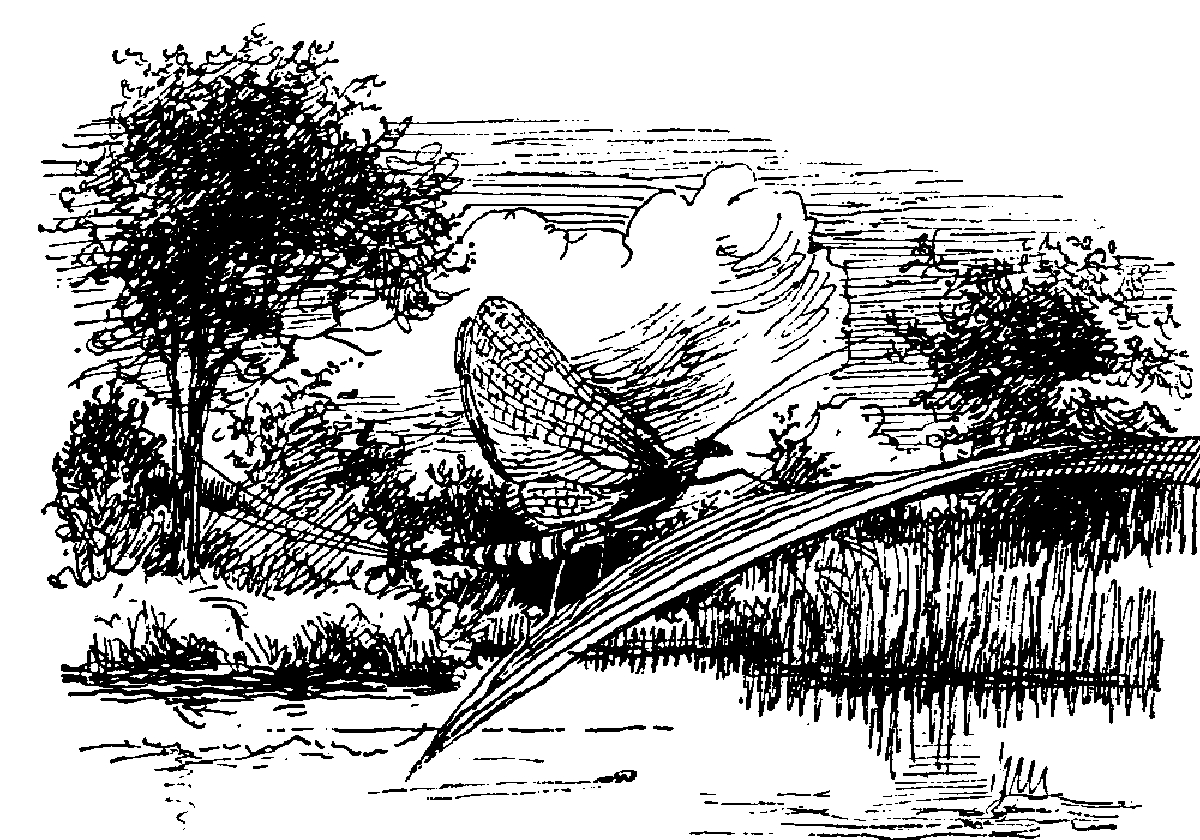
I could wish that every flyfisher could once in a while have the possibility to have a look into the ‘private life’ of one of our most interesting objects for imitation - the dayflies, or as some calls them mayflies and in latin Ephemeropterae. I had the luck at a very early stage in my career as a flyfisher to have read a lot about them. During my study to be a veterinary surgeon, I had in the first year lectures in what at that time was called zoology - to day they use the generic term, biology - in which we got a broad insight in every branch of animal life. This education helped me a great lot, when I started to get interest in flyfishing and those aspects related to it. Moreover we at that time learned to make drawings of what we saw in microscopes, which also trained one to look at the details of animals. “It is always easier to see what you expect to see, and to sharpen your reaction accordingly”. OLIVER KITE ‘Nymph Fishing in Practice’. 1963. Already in one of my first years as flyfisher I had a day in the early spring, when I let trout be trout and concentrated my eyes on what they were taking when they were rising to the surface - I placed my rod at a safe place for nosy cattle and walked in my hip-boots into the stream, where I from the shore had seen dayflies suddenly like a miracle appear on the surface. Standing in the middle of the stream I could see how the nymphs came floating in the surface, break through and a few seconds later show wings and all else that belongs to a mayfly in its dun-stage - what the scientists call Subimago. Looking closer I could a little under the surface see full-grown nymphs - one moment drifting motionless and the next making a few waves with the body and tails and by this move closer to the surface. I ‘scooped’ one of them into my hollow hand - the water seeped away and the moment it was gone the nymph sheet its ‘envelope’ and gave birth to a winged insect! At the moment of ‘birth’ they were very pale in the colours - but if I brought them home in a small container together with a few green leaves to keep the right humidity, I saw that the colours darkened and got brighter. If I were lucky and kept them not in too hot or sunny place, then they after a day would change skin once more and be what we call spinners and the scientists imagines - the stage in which most of them breed. I learned that it can be rather boring to sit hour after hour expecting this change, and I learned that I could ‘cheat’ them. In nature they sit mostly on the underside of leaves or branches waiting for the best time to moult - is the weather cold and wet, they can prolong their life as duns for nearly a week, but is it perfect it takes for most of them only a day. I imitated this by placing them in my refrigerator - simulating the bad, cold period and next day I took them out and placed the container at a more normal temperature and with some sunlight - then they changed to spinners in a very short time. On mild evenings one can see the males with their big ‘turban-eyes’ and long front-legs and tails fly in swarms over bushes or trees. Really they don’t fly - they dance - a few wing-strokes to lift them up and then they glide down with wings spread out. If one looks intensely, then perhaps one will see another dayfly - a female - flying up from the vegetation, up over the swarm of males and one of these catch her with his forelegs and bend his body so he can get a hold of her with his ‘mating-forceps’ - claspers and the mating takes place and they glide down together; but before they reach the earth or the water they separate - he to continue with the dance and she goes back in the vegetation for later on to take part in a swarm of females flying upstream until they come to a place suited for their vital mission - egg-laying. Standing on a bridge over my little stream I have often in the evening by looking intense on the water seen them flying in a real horde. One has to look carefully to see them. At one time I stood in the middle of the stream at a place with fast water in my hip-boots and suddenly I saw not one but many female spinners land on my boots and starting to crawl down in direction of the water - and they didn’t stop - they continued down with their wings collected over their body. I followed them with my eyes and they left my boots and crawled further on the bottom until they found a solid place, a stone or the like. Then they crawled forward against the current moving their body from side to side and at the same time placing their eggs on the surface in a sort of a band. After finishing her job, she get leave and drifted to the surface, where she was caught in the surface-film - what anglers call a ‘spent spinner’.